



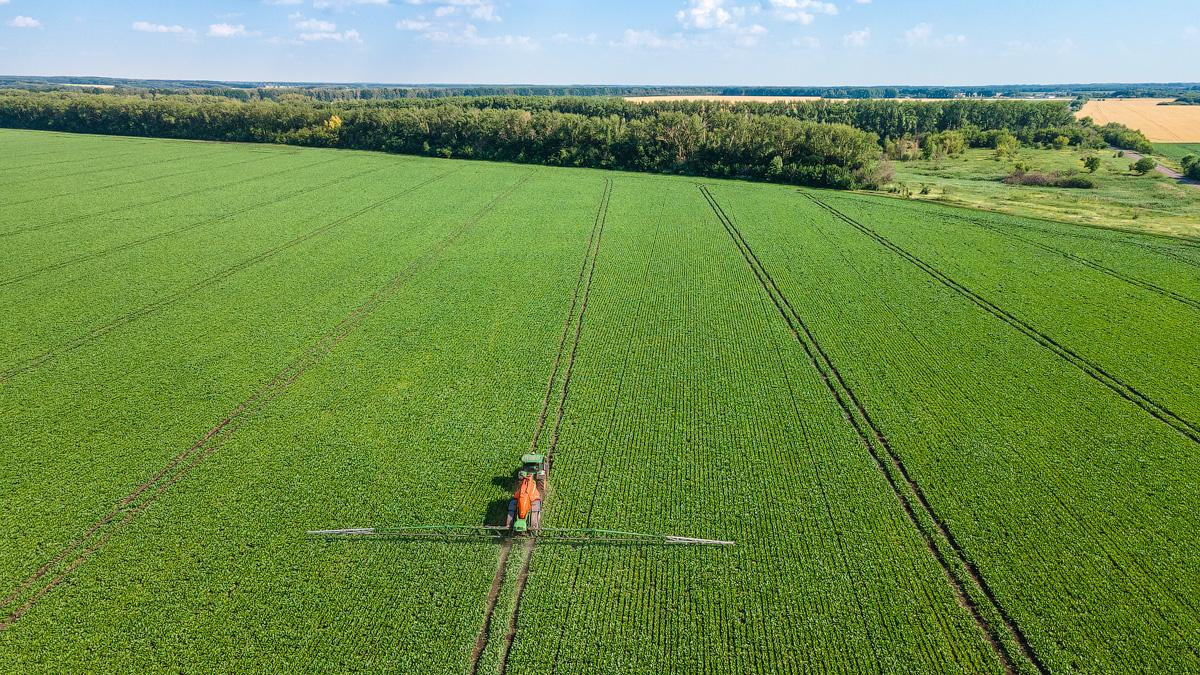
Agribusiness representatives say that on fields next to forests the yield of some crops is 15–20 % higher than on plots not protected by such plantings, and experts say that grain yield per hectare from fields protected by shelterbelts rises by up to 40%.
Prodimex Group specialists believe that shelterbelts are necessary where soil degradation cannot be stopped, or moisture reliably retained, without them. There are three conditions under which they should be created, comments the group’s CEO Viktor Aleksakhin. First, if wind erosion (deflation) is observed in the area, that is, when the fertile topsoil is regularly blown off the fields (dust storms). Second, in an arid climate: in zones of unstable and insufficient moisture, belts are needed to retain snow and accumulate moisture in the soil. Third, if the fields are located on slopes (complex terrain). “On slopes steeper than2–3° shelterbelts work as hydraulic structures that convert surface water runoff into subsoil flow and stop water erosion (soil washout),” the executive explains.
Forest plantings on Prodimex Group fields in places where winds blow have been there historically and serve to prevent wind erosion and the blowing away of crops, says Viktor Aleksakhin. “We maintain the shelterbelts, trim them regularly and, where necessary, plant additional trees,” he says.
In addition, Prodimex is implementing a project to restore shelterbelts on fields in the Belgorod region. Work on the project began in 2021. The company has already planted about 70 hectares of protective forest plantings. The project is carried out under the mandatory program for adaptive landscape farming and soil protection in the Belgorod region. “Apart from administrative reasons, we also see significant agrotechnical benefit from this project, since shelterbelts are the most reliable way to combat wind and water erosion, allowing soil fertility to be preserved over the long term,” Aleksakhin notes.
However, five years after the work began, it is still premature to assess the full protective effect of the shelterbelts, he adds. Forming a sustainable ecosystem takes at least10–15 years. The shelterbelts are now in a phase of intensive growth and adaptation, the executive clarifies. In creating shelterbelts in the Belgorod region, Prodimex uses government support measures. In particular, the preparation of design and cost documentation is subsidized, covering up to 5% of project costs. Agroforestry reclamation measures carried out for the first time are subsidized at 50% of costs incurred. “This is substantial help that partially offsets the cost of planting material and of the work itself,” Aleksakhin states.
The company’s specialists see the main task not simply as planting trees but as ensuring that they take root. “We are now resolving the question of engaging contractors, since it is technically difficult to carry out a significant volume of work with agricultural enterprises’ own resources alone,” the executive says. “Nevertheless, we understand the importance of the moment — if repairs are not made in time, the shelterbelts will have to be planted again. We aim not to lose the results and to optimize this process.”
In parallel, Prodimex will continue laying new belts. Planting of another 50 hectares of shelterbelts in the Belgorod region is planned for 2026. “In the longer term, given sufficient government support and forestry resources, we plan to continue this work in areas where there are risks of soil degradation,” Aleksakhin says.
Prodimex Group specialists believe that shelterbelts are necessary where soil degradation cannot be stopped, or moisture reliably retained, without them. There are three conditions under which they should be created, comments the group’s CEO Viktor Aleksakhin. First, if wind erosion (deflation) is observed in the area, that is, when the fertile topsoil is regularly blown off the fields (dust storms). Second, in an arid climate: in zones of unstable and insufficient moisture, belts are needed to retain snow and accumulate moisture in the soil. Third, if the fields are located on slopes (complex terrain). “On slopes steeper than
Forest plantings on Prodimex Group fields in places where winds blow have been there historically and serve to prevent wind erosion and the blowing away of crops, says Viktor Aleksakhin. “We maintain the shelterbelts, trim them regularly and, where necessary, plant additional trees,” he says.
In addition, Prodimex is implementing a project to restore shelterbelts on fields in the Belgorod region. Work on the project began in 2021. The company has already planted about 70 hectares of protective forest plantings. The project is carried out under the mandatory program for adaptive landscape farming and soil protection in the Belgorod region. “Apart from administrative reasons, we also see significant agrotechnical benefit from this project, since shelterbelts are the most reliable way to combat wind and water erosion, allowing soil fertility to be preserved over the long term,” Aleksakhin notes.
However, five years after the work began, it is still premature to assess the full protective effect of the shelterbelts, he adds. Forming a sustainable ecosystem takes at least
The company’s specialists see the main task not simply as planting trees but as ensuring that they take root. “We are now resolving the question of engaging contractors, since it is technically difficult to carry out a significant volume of work with agricultural enterprises’ own resources alone,” the executive says. “Nevertheless, we understand the importance of the moment — if repairs are not made in time, the shelterbelts will have to be planted again. We aim not to lose the results and to optimize this process.”
In parallel, Prodimex will continue laying new belts. Planting of another 50 hectares of shelterbelts in the Belgorod region is planned for 2026. “In the longer term, given sufficient government support and forestry resources, we plan to continue this work in areas where there are risks of soil degradation,” Aleksakhin says.